Politics and International Studies (POLIS)
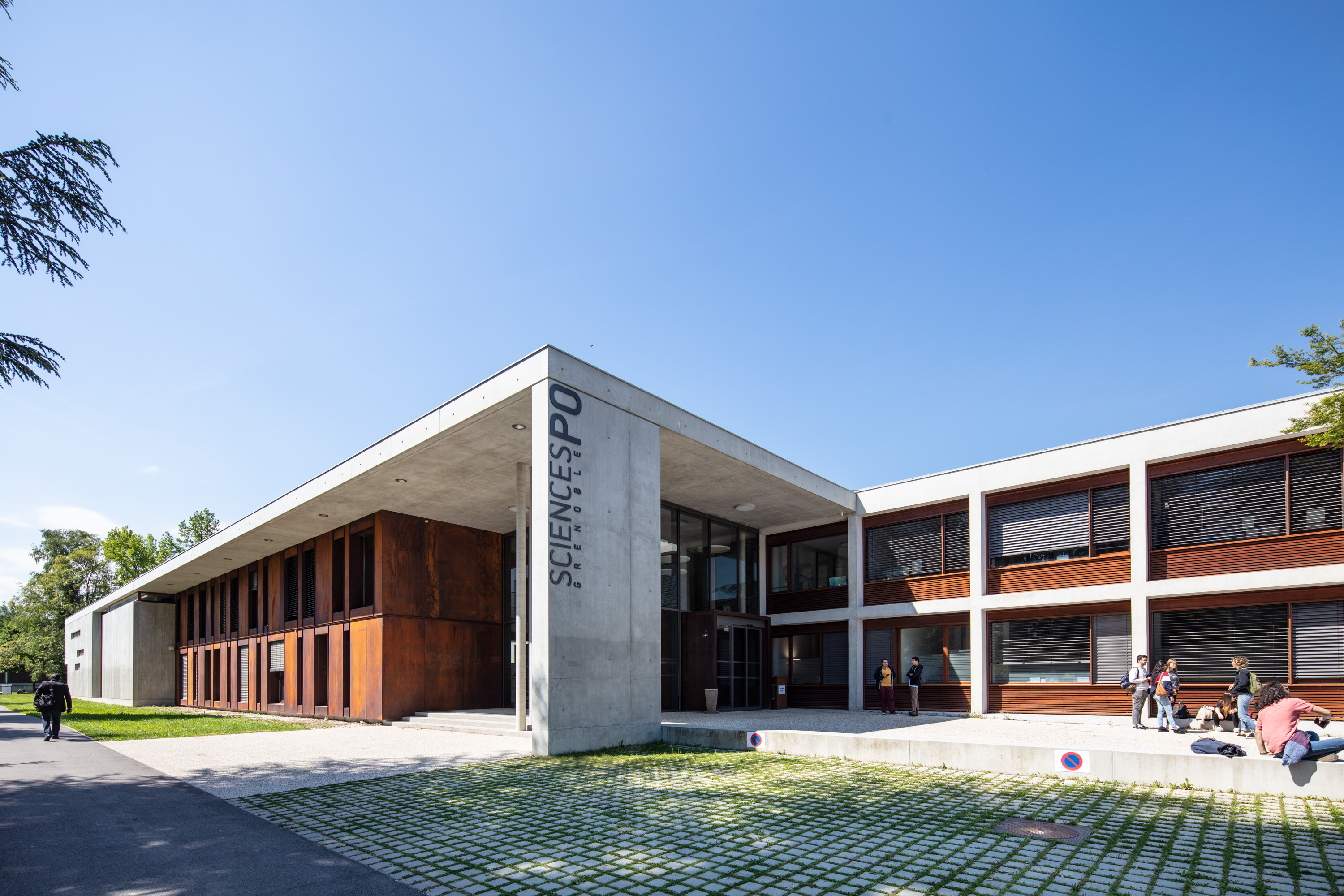
Long reserved for French speakers, the Sciences Po Grenoble - UGA degree is now accessible to English speakers thanks to the POLIS program. Aimed at an international audience, this program welcomes foreign students who have been educated outside France and who wish to pursue an ambitious and interdisciplinary intellectual path designed to train the decision-makers of tomorrow.
Presentation
Sciences Po Grenoble - UGA is an independent graduate school that is part of the University of Grenoble Alpes (UGA), one of the top 100 universities in the Shanghai ranking and the best French university outside Paris.
The POLIS international program helps promote cultural diversity at Sciences Po Grenoble - UGA by enrolling internationalstudentswho are unable to follow the general curriculum because they lack the necessary French language skills or the cultural background related to France and its history. Itis therefore intended forstudents who did not complete their secondary education at a French-speaking institution and who have anintermediate to advanced level of English proficiency (minimum B2 – see below).
Admission is by competitive examination, like all programs at the institute.
Like the general program for French-speaking students of French nationality, the POLIS program combines courses and methodology lectures, a full year spent studying abroad, an emphasis on acquiring social science methods, the Grand Oral exam, an introductory research seminar, the link between teaching and research, and access to student associations.
The POLIS program is characteristic Education a political Education : multidisciplinary (political science, law, economics, management, history, sociology, and languages), with a strong international focus and a strong social sciences research component.
The program content is tailored to this new audience while meeting the requirements of the Sciences Po Grenoble - UGA five-year diploma (equivalent to a master's degree).
Discover testimonials from former students below:
Organization of studies at Sciences Po Grenoble - UGA
The Sciences Po Grenoble - UGA diploma, equivalent to a master's degree, is obtained in five years.
The studies consist of two stages:
- Undergraduate: 3 years
Second stage: 2 years
The POLIS program is an undergraduate program that does not lead to a degree on its own.
It demonstrates the institution's desire to facilitate access for international students to the Sciences Po Grenoble - UGA qualification by offering an undergraduate program taught entirely in English.
In the event that students in the POLIS program who wish to pursue graduate studies at another institution, a certificate confirming that their undergraduate studies have been successfully completed may be issued.
Sciences Po Grenoble - UGA does not award a bachelor’s degree after three years, but only the degree from the Institut d’Etudes Politiques de Grenoble after five years (equivalent to a master’s degree). After three years, you will receive a certificate of completion for 180 ECTS credits, which allows you to apply to other universities in France and abroad.
A unique program
As in the general program for French-speaking students of French nationality, the POLIS program combines courses and lectures on methodology, a full year spent studying abroad, an emphasis on acquiring social science methods, the Grand Oral exam, an introductory research seminar, the link between teaching and research, and access to student associations.
However, other elements are specific to the POLIS program:
The scope of the new program (comparative politics, international issues viewed from the perspective of different disciplines, international relations, regional areas, and regional integration) does not require knowledge of France similar to that possessed by students after obtaining their high school diploma. However, from the first year onwards, a course on France (France: State, Institutions, Society) will enable them to gradually acquire this knowledge.
All classes are taught in English. However, students can take specialized courses taught in French if they wish and if their French language skills are sufficient (B2+).
Similarly, a significant amount of French (FLE - French as a Foreign Language ; two 2-hour sessions per week) is included in the first and third years to enablestudents to learn French and acquire a sufficient level (B2) to subsequently access our graduate programs (taught in French, with the exception of one, which can be taken in English).
Depending on the students' level, the mandatory academic year abroad could take place in a French-speaking country in order to practice the language.
Programme
The Programme may change slightly each year.
For an overview of the courses offered this year, please refer to the Assessment Guidelines (MCC). This document details the types of courses, their titles, and their weighting.
The POLIS group is not large (around 15 students are admitted each year), but classes are generally taught either with the French students from Sciences Po Grenoble - UGA, or with international exchange students from around the world.
Entrance exam
The competition is open to candidates from foreign secondary schools who hold or are in the process of obtaining a foreign secondary school diploma (equivalent to the French baccalaureate) and who have a sufficient level of English. The international competitive entrance examination takes place in two phases: an eligibility phase followed by an admission phase.
1. Be preparing for or have obtained a high school diploma from a non-French institution.
The POLIS program is not open to continuing education
Anyone who has suspended their studies for two or more years is subject to the continuing education system. Unfortunately, the POLIS program is not part of the continuing education courses offered by the institution.For more information, please refer to the Education page on our website.
- 2. Advanced or independent English proficiency (B2+):
- TOEFL 95
- IELTS 6.5
- TOEIC "listening and reading" (945) & "speaking and writing" (360)
- Cambridge Certificate 179 minimum
- Duolingo Test (minimum total score of 125, with a minimum score of 110 required for each section: "listening, reading, speaking, and writing")
- In addition: a good knowledge of French is appreciated but not required.
1. Your high school diploma (ONLY if already obtained)
2. Your official transcript for the last two years of high school (1 PDF) - with a certified translation in English or French
Optional: official university transcript (if applicable) - with certified translation in English or French
- 3. Your resume written in English (1 page)
- 4. A cover letter including your background, reasons for applying, extracurricular activities and commitments, and any other relevant information (maximum 300 words).
5. Your official English language proficiency certificate (see accepted tests and required levels above).
The essay, which was required in previous years, is no longer required in the application.
Registration for the 2026 edition of the competition has closed.
Phase 1. Eligibility
Online application submission: from January 12, 2026, at 2:00 p.m. to March 17, 2026, at 12:00 p.m. (GMT+1).
Eligibility is determined based on the application file, based on the information provided by candidates on the Sciences Po Grenoble - UGA competition platform.
Creating the file:
Create your online Candidate Account (access the platform by clicking here).
Submit the required documents from your Candidate Area.
Application fee: €110, payable online by credit card only (non-refundable application fee).
File evaluation:
A jury composed of a teacher and a teacher-researcher from Sciences Po Grenoble - UGA reviews the candidates' applications and assigns them a score.
This review is based in particular on:
- The academic skills, level of English, grades obtained, methodological skills, know-how, and interpersonal skills of the candidate, assessed on the basis of the documents provided on the Sciences Po Grenoble - UGA competition platform.
- The candidate's motivation and the consistency of the Education project, which must be entered on the Sciences Po Grenoble - UGA competition platform, with Education Po Grenoble - UGA Education offer.
- The candidate's commitments, activities, interests, and extracurricular achievements of all kinds, as reported on the Sciences Po Grenoble - UGA admissions platform, in order to assess the candidate's level of independence.
The results of the first phase will be published on March 31, 2026, at 12:00 p.m. (GMT+1).
Eligible candidates will then be invited to an interview.
Phase 2. Admission: remote interviews.
Admission interviews will take place between April 15, 2026, Monday, April 20, 2026, and Wednesday, April 22, 2026.
The admission exam consists of a 15-minute oral interview focusing on the applicant’s academic background, career goals, and motivation, as well as their understanding of a short article on geopolitics in English (maximum 10 pages), which applicants must read in advance. The interview is conducted in English via videoconference.
The number of places on this course is set by order of the Director. There are 15 places.
Students admitted under the Refugees Welcome program are automatically eligible for the international undergraduate program without their admission counting toward the number of places available in the competitive admissions process.
Results.
Updated on April 1, 2026.
Due to the switch to daylight saving time, the time of publication of the results changes from GMT+1 to GMT+2.
The results will be announced as scheduled on April 23, 2026, at noon French time (GMT+2).
Candidates admitted to the Grenoble Institute of Political Studies after completing the two tests are required to register administratively within the required time frame, otherwise they risk losing their admission.
Please note: Students admitted to Sciences Po Grenoble - UGA cannot defer their admission to the following year.
Tuition fees
Tuition fees are:
- Tuition fees at Sciences Po Grenoble - UGA.
You can find details on this webpage. - The Student and Campus Life Fee, also known as the CVEC, is approximately €105 per year.
These tuition fees are largely subsidized by the French government, since the actual cost per studentstudying at an elite university is €17,260 (figures for 2020-2022, https://fr.statista.com/).
Transportation, sports and cultural activities, meals at the university restaurant, and many other things are subsidized by the French government. Professors very rarely ask students to buy textbooks.
Please note: in the event of non-payment of tuition fees, the student is not permitted to attend classes or take exams.
Contact
Morgane TIBERTI-MAMAN
International Programs Coordinator
contact-internationalprogram@sciencespo-grenoble.fr
+33 4 76 82 61 01 (by appointment)
International Relations Office - Office #13