Could you remind us what DemoCIS is?
DemoCIS is a major interdisciplinary research program led by the University of Lille, bringing together more than 300 researchers from 51 research units. Its goal is to analyze contemporary changes in democracies and propose concrete ways to strengthen them.
The project is based on a widely shared observation: democracies today are being undermined by several phenomena, such as political polarization, distrust of institutions, disinformation, and the erosion of the rule of law. To address these issues, DemoCIS is structured around four major challenges, ranging from institutional reform to combating information disorder, including the analysis of threats to democracy and, in our case, the transformations of citizenship.
Actually, what is the role of Défi 2 in this program?
Challenge 2 focuses on an often-overlooked perspective: democracy “from the bottom up”—that is, the way ordinary citizens experience, practice, and understand democracy in their daily lives.
We start with a simple idea: democracy is not limited to voting or institutions. It also plays out in more subtle forms of engagement, such as community involvement, local activism, and informal discussions.
Our goal is to understand how these practices interact with institutions, and whether they help revitalize democracy or, on the contrary, reveal its limitations.
Where exactly are you in the project today?
We are currently at a pivotal stage in the operational launch. The conference held on March 18 and 19 marks an important milestone: it provides an opportunity to organize the teams, share initial theoretical and methodological frameworks, and launch the various initiatives under Challenge 2.
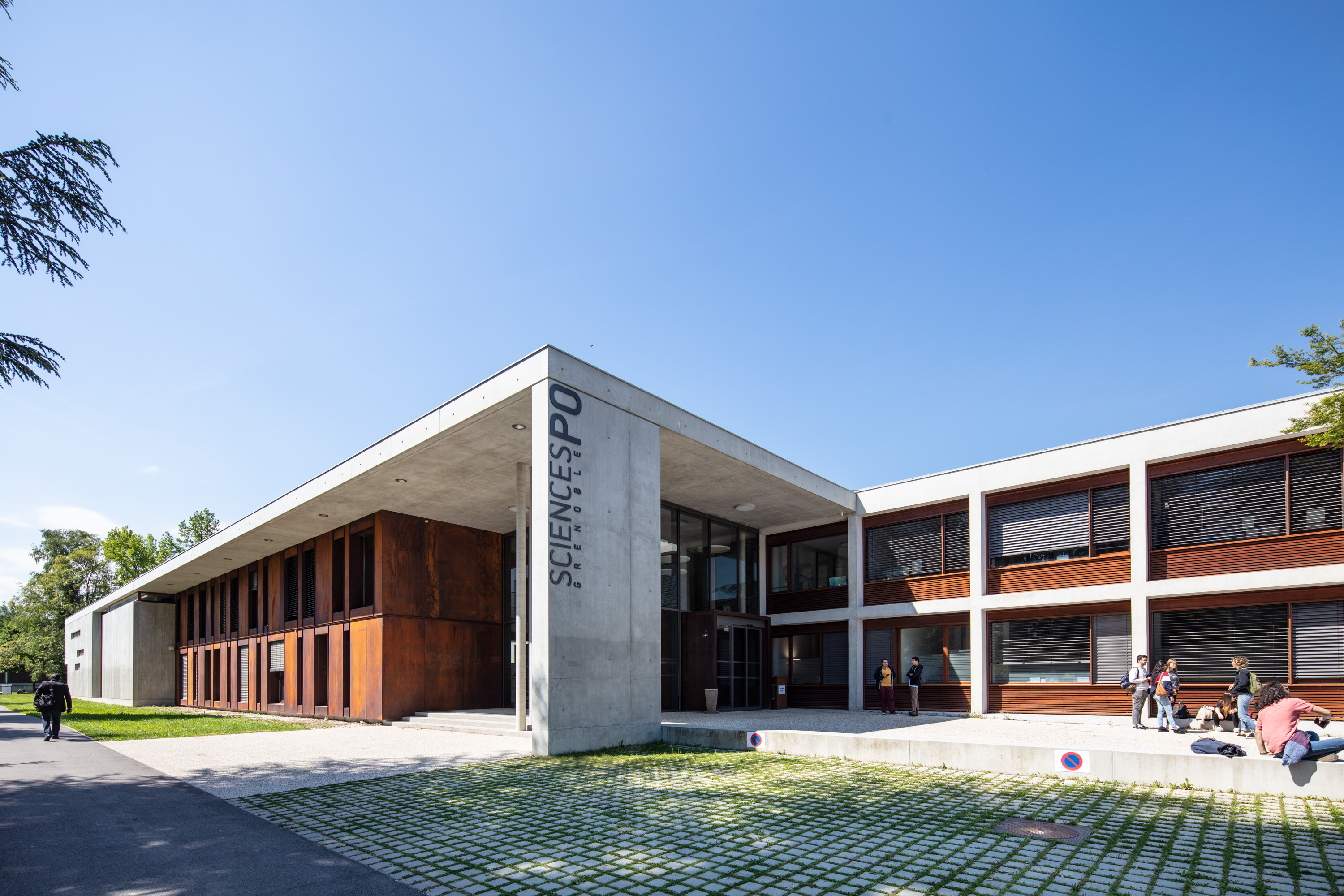
At the same time, we have already made significant progress on the design of one of the project’s key components: the Democracy Barometer—the “everyday conceptions” component—which we are piloting at Sciences Po Grenoble - UGA, in collaboration with Pacte.
What does this Barometer entail?
This is a groundbreaking initiative designed to track, over time, how citizens perceive democracy, its principles, and its evolution. It is based on an innovative approach: rather than simply asking whether people support democracy, we analyze the trade-offs they are willing to make between different democratic principles. For example: should we prioritize efficiency or participation? The will of the majority or the rights of minorities? The power of experts or that of citizens?
This shift is essential, because we now know that many citizens support democracy in principle while sometimes accepting practices that run counter to it.
How will you measure these trade-offs?
We use a combination of methods. First, a large-scale survey of 12,000 people, who will be interviewed on multiple occasions to analyze the flexibility of their views on democracy and their responsiveness to the political climate, particularly during election periods.
This initiative is complemented by an in-depth qualitative component, coordinated by Stéphanie Abrial, which allows for a deeper exploration of lived experiences. Semi-structured interviews will be conducted with a panel of respondents tracked over time, in order to understand how their social and biographical trajectories shape their relationship to democracy.
Another unique feature of the survey is its incorporation of a gender-based approach, distinguishing between the traditional gender gap—differences between men and women—and a “sexism gap,” which more specifically measures the role of gender-related attitudes and perceptions in conceptions of democracy. Two people of the same sex can indeed have very different views of democracy depending on their relationship to gender and equality. This is a crucial distinction that Louise Bruyas, a PhD student in political science at Pacte.
What is Sciences Po Grenoble's specific role in DemoCIS?
Sciences Po Grenoble - UGA plays a central role in Challenge 2. We co-coordinate this challenge and lead the Democracy Barometer on everyday conceptions of democracy, in collaboration with Pacte, the University of Avignon, and other partners.
More broadly, Challenge 2 integrates these research approaches with other forms of exploration of citizenship. This is particularly true of the initiative focused on artistic practices and cultural mediation, in which Lisa Marx is involved. This initiative helps broaden the analysis of democracy beyond traditional institutional frameworks by incorporating sensitive, situated, and often overlooked forms of participation.
What are the next important steps?
The timeline is already well-defined. 2026: Fieldwork begins with the first wave of the quantitative survey and the first qualitative interviews. 2027: Two survey waves, before and after the presidential election, to measure the campaign’s impact on perceptions of democracy. 2028–2030: Continued longitudinal tracking to observe changes over time. At the same time, the results will inform citizens’ assemblies and public policy recommendations.
Why is this project important today?
Because we can no longer be content with merely measuring abstract support for democracy. Today, the central question is: what kind of democracy do citizens actually want?
The existing research show that citizens can support representative democracy, direct participation, and sometimes even more authoritarian forms of government. Understanding these tensions is essential to avoiding policy missteps and designing reforms that truly meet social expectations.