Since 2024, Serbia and Georgia have seen significant student and citizen protests, against a backdrop of electoral disputes, corruption, police violence, and violations of the rule of law. These movements directly raise the question of the role played by the European Union in defending the democratic principles that it places at the heart of the enlargement process.
-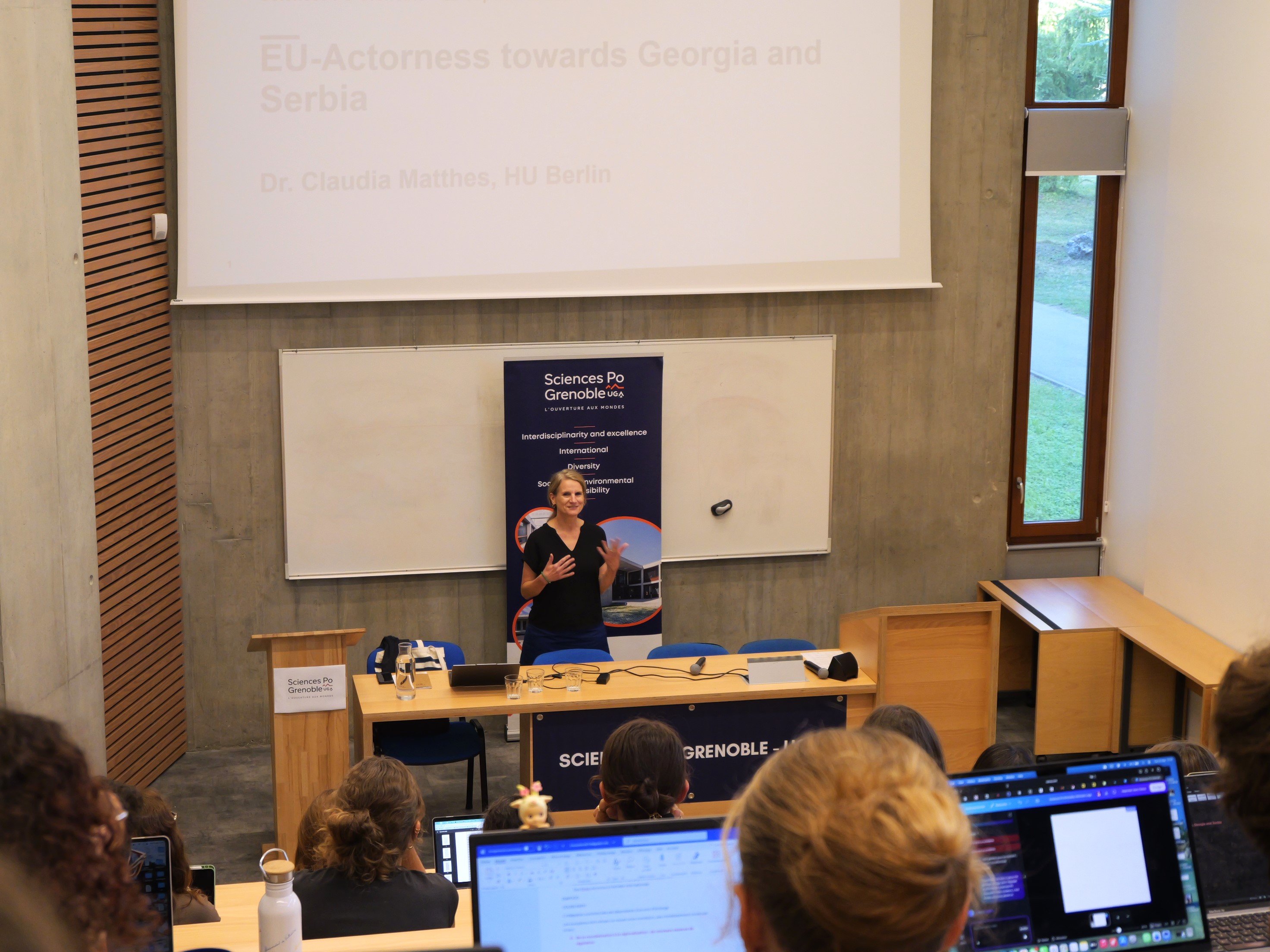
Claudia Matthes thus focused on “Europeanactorness”—that is, the Union’s ability to act in a coherent and influential manner. The comparison, however, reveals differing responses: in Georgia, European institutions adopted positions that were more critical of the government and more explicitly supportive of the protesters, whereas visits by European officials took place primarily in Serbia.
These discrepancies reflect both the differences among European institutions and the influence of geopolitical interests. Above all, they show that enlargement is not merely an administrative process: it fuels strong political and democratic expectations in the candidate countries.
Through the examples of Serbia and Georgia, the conference thus highlighted a key tension: the European Union’s ability to translate the principles it upholds into coherent and transparent political action.