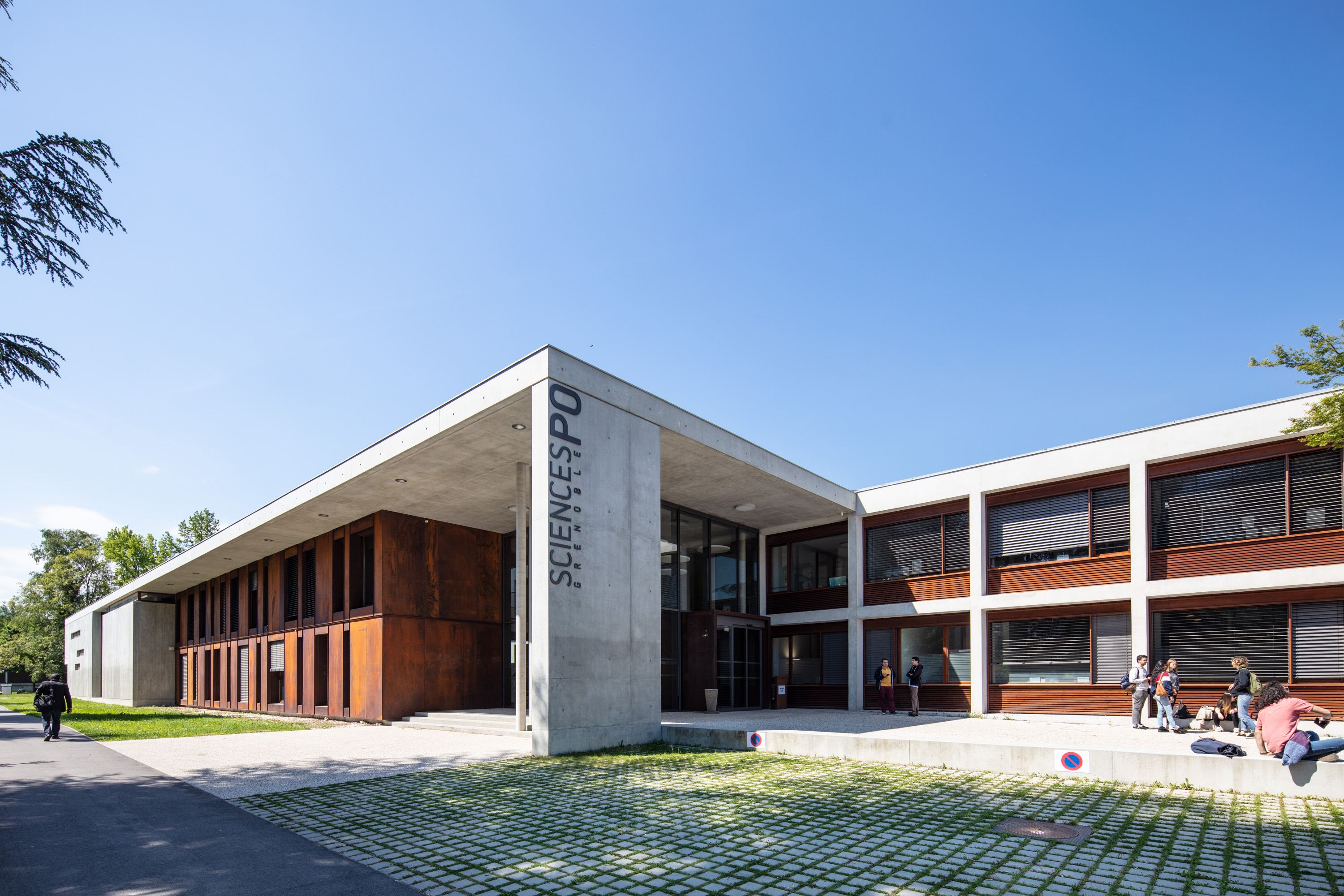
Giving a Voice to All Young People
Students and young people who are not enrolled in school: The Grenoble Youth Citizens’ Convention brings together participants aged 18 to 26—with diverse experiences and backgrounds—around a shared goal: to reflect together on the future of our democracies and the role young people wish to play in them.
Organized by Sciences Po Grenoble - UGA, the University of Grenoble Alpes, the City of Grenoble, and Grenoble Alpes Métropole, this initiative aims to generate proposals drawn directly from the experiences of young people, whose concerns and aspirations are sometimes not sufficiently heard in public debate.
The goal? To conceive of democracy “from the bottom up,” drawing on the lived experiences, expectations, and ideas of those who will be called upon to bring tomorrow’s institutions to life.
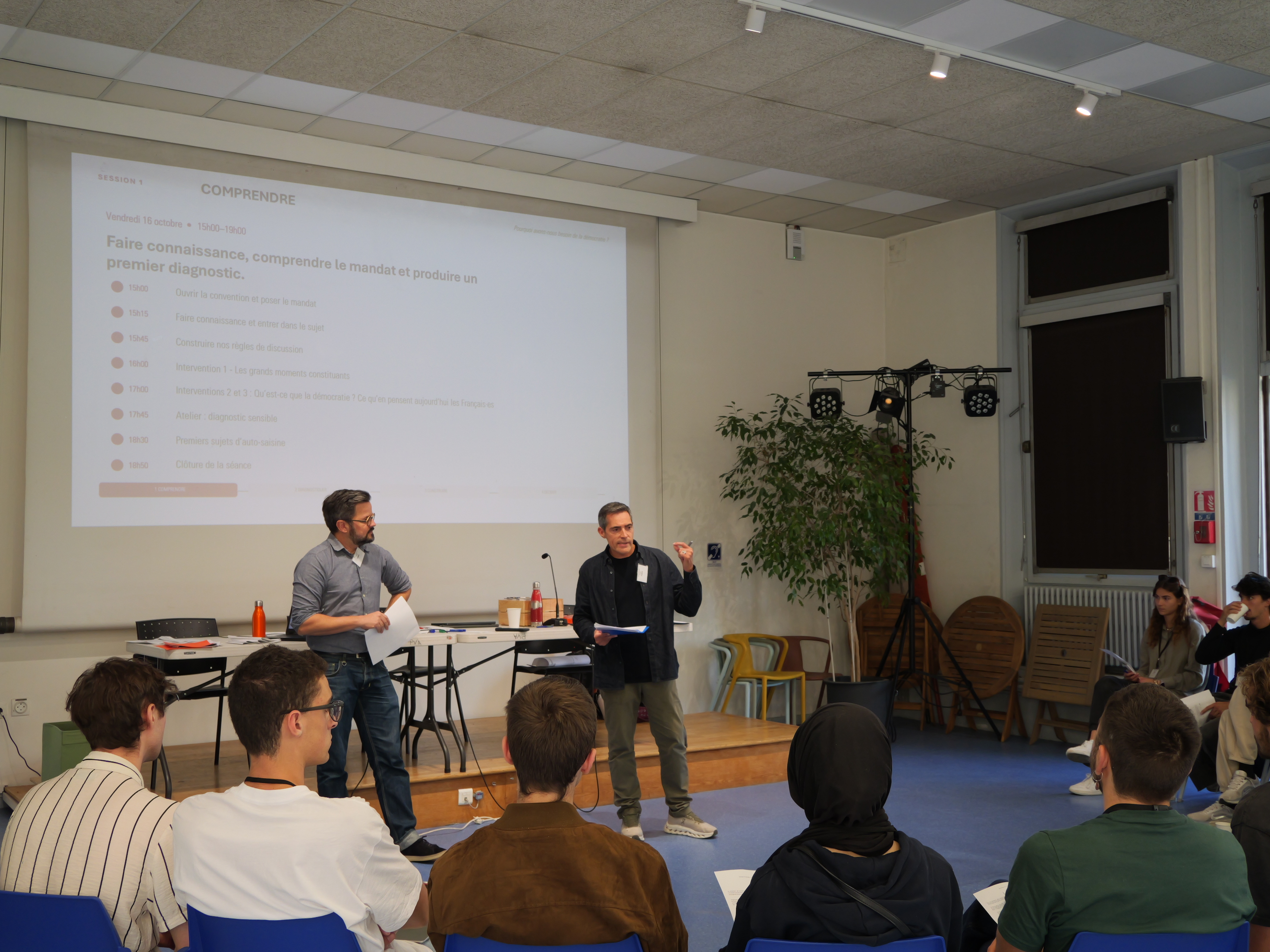
Understand, diagnose, build, decide
This first meeting marked the launch of a collaborative effort organized around four main stages: understanding, assessing, building, and deciding. With support for their discussions, participants are invited to compare their perspectives, examine how institutions function, and consider new ways to participate in public decision-making.
Who should decide? How can we better represent citizens? What forms of democratic participation should we develop? These questions form the central theme of this process, in which listening, the exchange of ideas, and the search for compromise play a central role.
Far from being a mere simulation or educational exercise, the Convention offers a genuine forum for deliberation, where every experience counts and where the social sciences contribute to the collective discourse.
Insights from Grenoble to Fuel the National Debate
The Grenoble Convention is part of a broader initiative linked to the Citizens’ Convention for Democracy held in Lille, which brings together 52 citizens selected at random, of all ages, to discuss the question: “What kind of democracy do we want to live in?”
The discussions held in Grenoble are intended to inform this national dialogue and contribute to the recommendations formulated following the Lille initiative. The goal of this democratic experiment is to bring proposals from the grassroots level into the public debate.
The work in Grenoble is also expected to result in a joint report containing recommendations for national and local institutions. A public presentation is planned for institutional and political stakeholders, particularly in light of the 2027 presidential election.
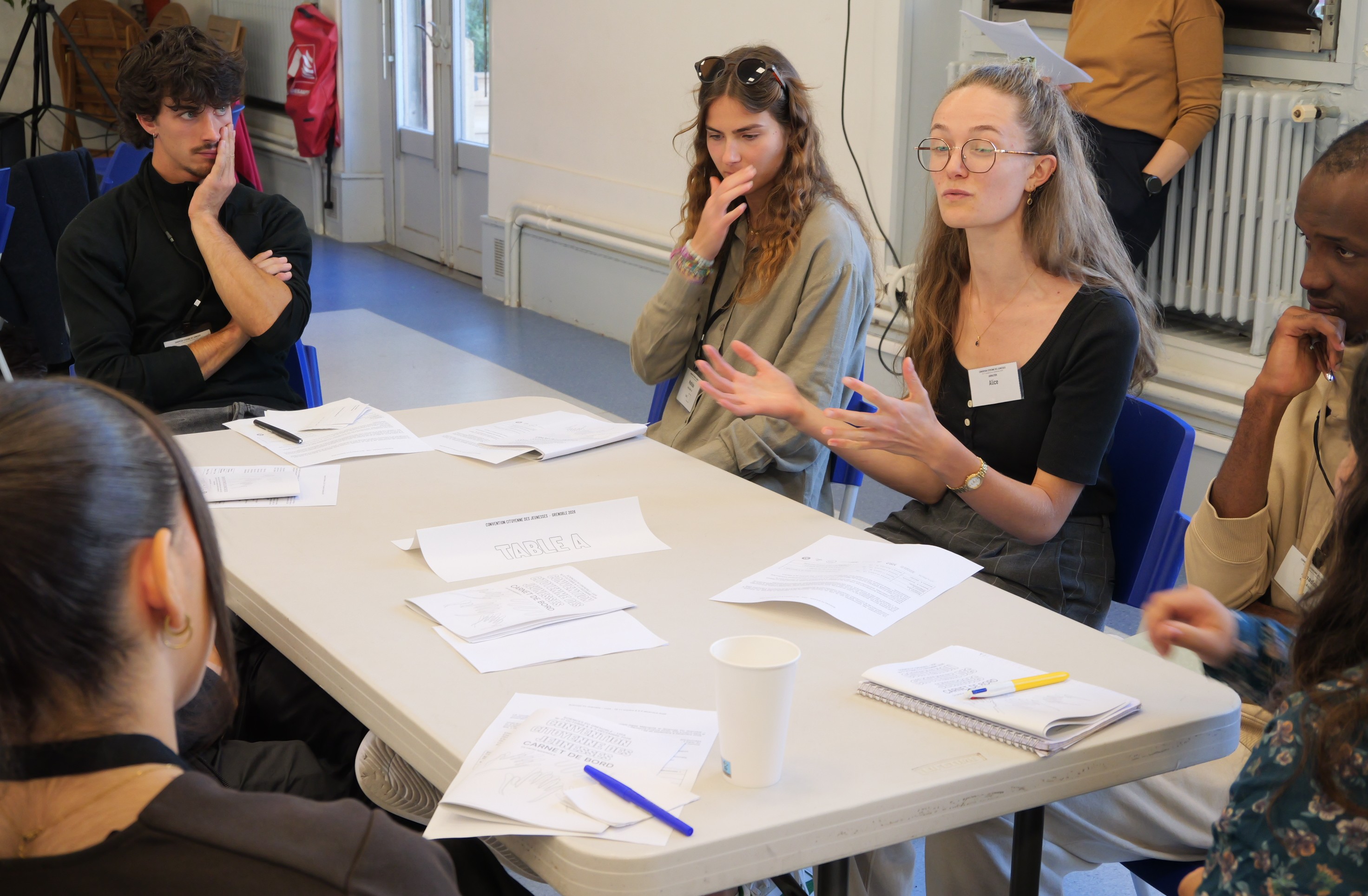
A collective discussion that continues into December
Following this first session, the participants will meet again on December 4 and 5 to continue their discussions and move toward formulating joint proposals.
This initiative is part of the DemoCIS (Democracies, Citizenship, and Institutions in the Face of Transformations in Public Spaces) research program, which focuses on the transformations of democracy, citizens’ expectations, and avenues for institutional renewal. By placing special emphasis on the diversity of young people, this conference underscores a fundamental conviction: democracy is not conceived solely within institutions; it is also built together with those who challenge them.

This initiative is supported by the DemoCIS program, which is funded by the government as part of the France 2030 initiative through the National Research Agency (ANR).