Teaching faculty
Jean-Charles FROMENT, former director of Sciences Po Grenoble, advisor to the Ministry of Justice, and now back as a professor
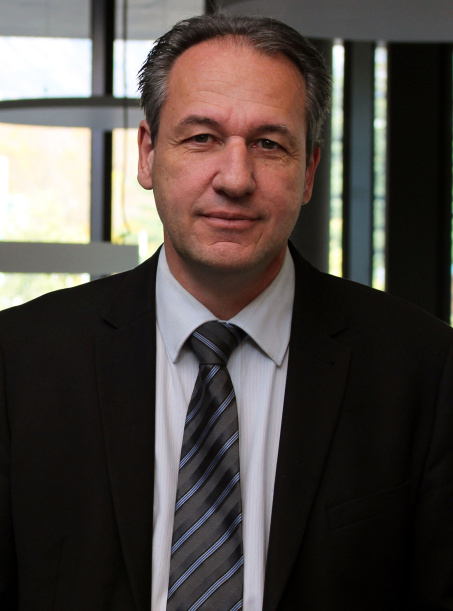
A former student at Sciences Po Grenoble - UGA (1986–1989) and a university professor certified in public law, Jean-Charles Froment will return to the institution at the start of the 2026–2027 academic year as a professor, following nearly five years on secondment to the Ministry of Justice as an advisor to the Director General of the Prison Administration. This marks a return to a place he knows well, having served there successively as a student, guest lecturer, director from 2012 to 2020, and now as a faculty member.
A specialist in public law, criminal justice, and security policy, he has built an academic career marked by the breaking down of disciplinary barriers. As director of the Center for Studies and Research on Law, History, and Public Administration, a research associate at the International Center for Comparative Criminology at the University of Montreal, and holder of an international chair in criminology at the Free University of Brussels, he has also carried out numerous expert assignments in France and abroad, notably for the European Union and the United Nations Development Program.
But when he talks about his career path, Jean-Charles Froment prefers to speak of a guiding principle rather than a résumé: “Staying true to my convictions, breaking down barriers between fields of knowledge, and discovering new experiences.” Teaching law while examining it through the lens of sociology or political science, bringing different perspectives together, comparing systems, and putting knowledge to the test in real-world contexts—these, in his view, form the common thread running through his career path.
If he had to sum up in one word what has guided his career, it would be freedom: “the freedom to take on a variety of professional roles, the freedom to express and share ideas through dialogue and active listening, and the freedom to choose one’s subjects and how to approach them.”
It is a principle he now considers more essential than ever to university life. “Let us strive to preserve the university as a space of freedom, ” he concludes, speaking with the perspective of someone who also devotes part of his professional time to the correctional system.